Climatic Shifts Altering Probabilities for Outdoor Athletic Events in Diverse Regions
Otto Richter · Jul 19, 2026
Climatic Shifts Altering Probabilities for Outdoor Athletic Events in Diverse Regions
Weather patterns continue to evolve across continents, and data from meteorological agencies shows these changes directly influence performance probabilities in outdoor athletic competitions. Researchers at institutions tracking long-term climate variables note that temperature fluctuations, precipitation shifts, and wind pattern alterations create measurable effects on event outcomes in regions from North America to Australia and Europe.
Studies conducted by the National Oceanic and Atmospheric Administration indicate that average temperatures during summer athletic seasons rose by 1.2 degrees Celsius between 2015 and 2025 in mid-latitude zones, while precipitation events increased in frequency by 18 percent across the same period. These shifts affect endurance events, racket sports, and team competitions where environmental exposure plays a central role in determining results.
Heat and Humidity Patterns in North American and European Venues
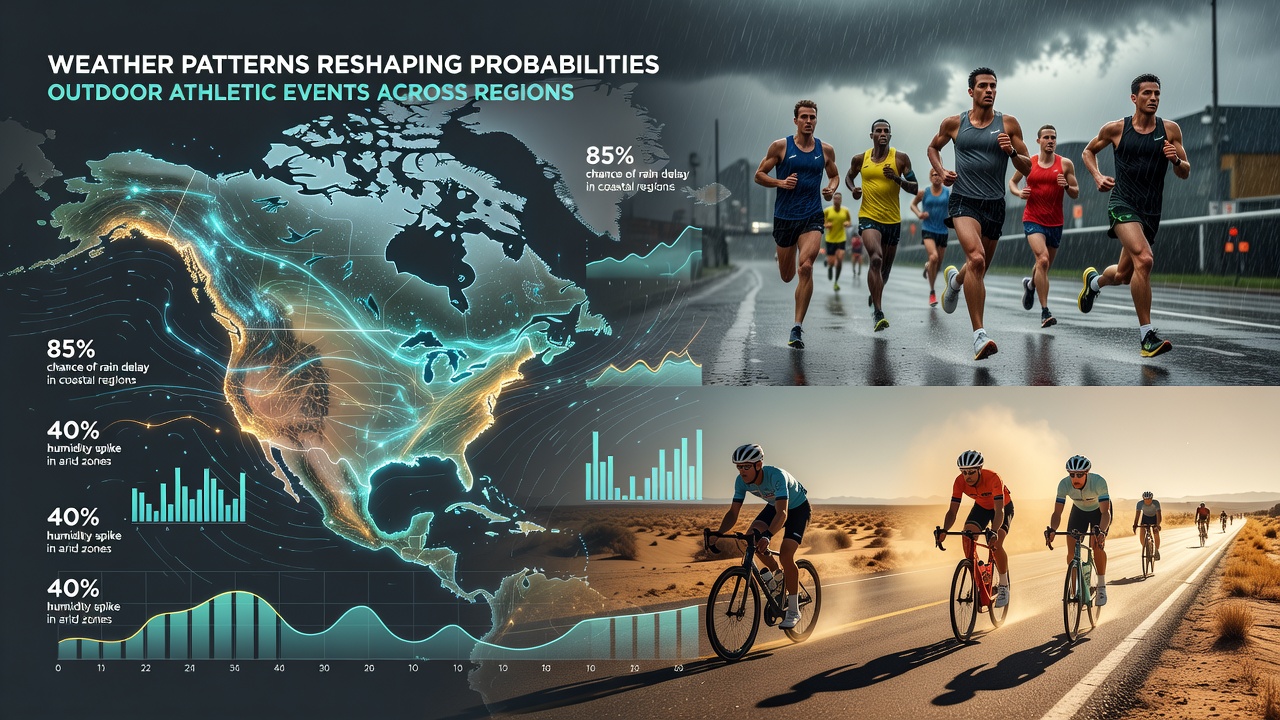
Marathon and triathlon organizers in the United States and southern Europe report adjusted start times and modified course protocols because of sustained heat indices above 32 degrees Celsius during peak competition windows. Data collected from events held in July 2026 across multiple states showed finish rate reductions of 7 to 12 percent compared with similar races conducted under cooler baseline conditions from the previous decade. Observers note that humidity levels above 65 percent compound these effects by limiting evaporative cooling, which alters pacing strategies and increases medical intervention rates at aid stations.
European tennis tournaments scheduled on outdoor clay and grass surfaces experienced parallel adjustments, with scheduling committees extending rest periods between matches when wet-bulb globe temperatures exceeded established thresholds. Records from governing bodies reveal that match durations extended by an average of 14 minutes per set under elevated heat conditions, and unforced error counts rose proportionally in afternoon sessions.
Precipitation Variability Affecting Field Sports in Asia and Oceania
Monsoon-influenced regions in Southeast Asia and parts of Australia demonstrate increased rainfall variability that disrupts cricket, soccer, and rugby schedules. Statistics compiled by the Australian Bureau of Meteorology show that outdoor venue closures due to waterlogged pitches rose 23 percent during the 2025-2026 season compared with the 2018-2019 baseline. Event planners respond by incorporating flexible rescheduling frameworks and enhanced drainage infrastructure, yet probability models for match completion within original timeframes declined accordingly.
One analysis of soccer leagues operating across monsoon-prone zones found that teams playing in venues with upgraded pitch technology maintained higher possession percentages during heavy rain periods, whereas clubs without such adaptations recorded increased turnovers. These patterns emerge consistently across datasets spanning multiple seasons and geographic clusters.
Wind and Storm System Influences on Coastal and Mountain Competitions
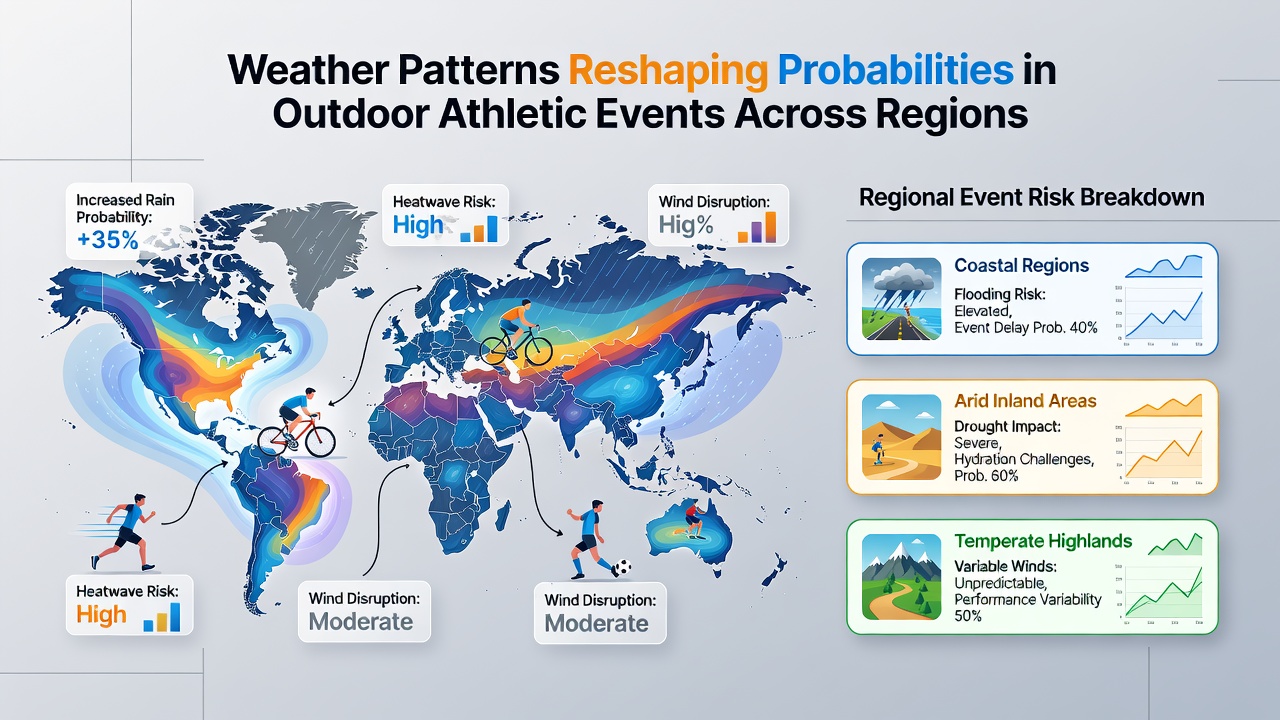
Coastal golf tournaments and mountain cycling races face heightened exposure to shifting wind regimes and localized storm cells. Research published through the European Centre for Medium-Range Weather Forecasts documents that average wind speeds during competitive windows increased by 9 percent across Atlantic and Mediterranean coastlines between 2020 and 2026. Golf scoring averages on exposed links courses reflect these changes through elevated scores on downwind and crosswind holes, while cycling time trials in alpine regions show reduced average speeds when gusts exceed 25 kilometers per hour.
Event safety protocols now incorporate real-time wind monitoring and lightning detection systems that trigger automatic suspensions. Records indicate suspension frequency rose notably during the 2026 season, particularly in venues situated near large bodies of water where convective activity develops rapidly.
Data Integration and Probability Modeling Across Regions
Academic teams at universities in Canada and Scandinavia developed integrated models that combine historical weather archives with performance databases to quantify shifting outcome probabilities. These frameworks demonstrate that certain athletic disciplines exhibit greater sensitivity to specific variables: endurance running responds strongly to heat and humidity combinations, whereas precision sports such as archery and shooting register impacts from wind direction consistency and barometric pressure changes.
International federations increasingly reference these models when setting qualification standards and venue selection criteria. Data-sharing agreements between meteorological services and sports organizations facilitate proactive adjustments that maintain competitive integrity while addressing environmental realities.
Conclusion
Regional weather pattern evolution continues to reshape performance baselines and completion probabilities in outdoor athletic events worldwide. Organizations respond through infrastructure upgrades, scheduling modifications, and data-driven planning that accounts for observed climatic trends. Continued monitoring by scientific agencies and sports bodies provides the foundation for maintaining safety and fairness across competitions held under changing atmospheric conditions.