Elevation's Subtle Effects on Outcomes in High-Altitude Soccer and Equine Events
Ines Baumann · May 21, 2026
Elevation's Subtle Effects on Outcomes in High-Altitude Soccer and Equine Events
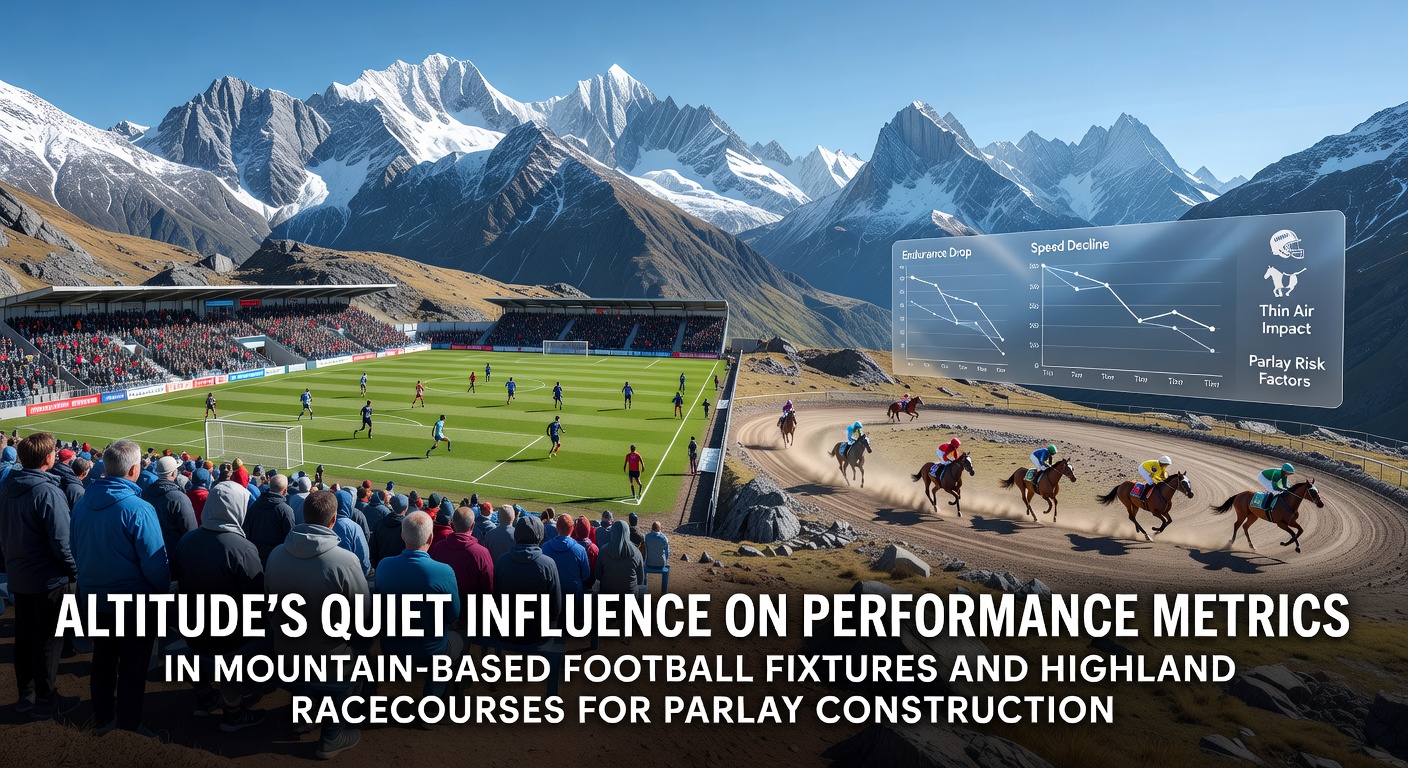
High-altitude environments quietly reshape performance statistics in mountain-based football fixtures as well as highland racecourses, and those shifts feed directly into accumulator strategies that bettors assemble across multiple events. Researchers have documented how reduced oxygen availability at elevations above 2,000 meters alters player stamina, ball trajectory, and recovery rates during matches, while similar conditions influence equine endurance and finishing speeds on elevated tracks. Data from various competitions show measurable differences in goal tallies, pass completion percentages, and race times when teams or horses move between sea-level venues and mountain sites.
Football Metrics Under Thin Air Conditions
Teams that regularly train and compete at altitude often record higher home win rates because visiting squads experience quicker fatigue in the later stages of matches. Studies conducted by sports physiologists at institutions such as the University of Colorado have tracked heart-rate spikes and reduced sprint distances among players unaccustomed to lower oxygen levels, and those physiological changes translate into fewer shots on target after the 70-minute mark. Observers note that ball flight behaves differently as well, with passes and crosses traveling farther yet arriving with less spin, which affects set-piece success rates in fixtures staged at Andean or Alpine stadiums.
League schedules that include back-to-back highland games create additional layers of data for accumulator builders to examine. When clubs travel from lowland bases to venues like those found in Bolivia or Switzerland, historical results reveal patterns of lower total goals combined with elevated foul counts as players tire and commit more errors under pressure. Analysts who compile multi-leg bets incorporate these trends by adjusting expected goal models and possession forecasts, and the adjustments become particularly relevant during congested periods when multiple mountain fixtures appear on the same card.
Highland Racecourse Performance Patterns
Equine athletes face comparable challenges on highland tracks where thinner air limits sustained effort over longer distances. Records from race meetings held above 1,500 meters indicate that horses with proven stamina at sea level sometimes underperform in the closing stages, whereas locally acclimatized runners maintain steadier pace distributions. Trainers adjust training regimens accordingly, and those preparations show up in official timing sheets that reveal narrower margins between favorites and longer-priced contenders when conditions include both elevation and variable mountain weather.

Handicappers who factor altitude into speed ratings often discover value in place markets rather than outright win bets, because the spread between top finishers compresses under reduced oxygen. Meetings scheduled for May 2026 at several European mountain venues will again test these dynamics as spring campaigns shift toward summer fixtures, giving data collectors fresh samples to refine their projections for cross-sport accumulators that pair football results with racing outcomes.
Integrating Altitude Data Into Parlay Construction
Accumulator builders combine football and racing selections by weighting each leg according to venue-specific statistics rather than blanket form guides. A parlay that includes an Andean league match and a highland steeplechase therefore carries distinct risk profiles because both events exhibit compressed scoring or finishing spreads when elevation plays a role. Software used by professional syndicates now includes altitude correction modules that recalibrate probabilities based on historical datasets, and those recalibrations help identify where bookmakers may have left margins that reward careful analysis.
Case studies compiled by independent research groups illustrate the point. One review of fixtures between 2018 and 2024 showed that teams arriving from below 500 meters won only 28 percent of their matches at venues above 2,500 meters, while home sides posted average goal advantages of 0.9 per game. Similar reviews of racing data from Colorado and Swiss tracks found that horses with prior high-altitude experience improved their place strike rate by roughly 12 percentage points compared with newcomers. Bettors who fold these figures into multi-leg wagers adjust stake sizing and leg ordering to manage variance across the entire slip.
Conclusion
Altitude continues to exert measurable influence on both football performance metrics and racing outcomes at elevated sites, supplying accumulator constructors with repeatable patterns they can apply when building multi-sport bets. As fixtures and meetings progress through 2026, updated datasets will further refine those models, allowing those who track venue-specific statistics to maintain an edge grounded in documented physiological and environmental effects rather than general trends alone.