Endurance Form Across Seasons: Pairing Equine Racing Cycles With Tennis Court Performances
Ines Baumann · Aug 25, 2026

Endurance Form Across Seasons: Pairing Equine Racing Cycles With Tennis Court Performances
Seasonal shifts influence performance patterns in both equine endurance events and court-based competitions, where data collected over multiple years shows distinct cycles that emerge during specific months. Observers note that horse racing stamina tends to peak in late spring through early autumn in many regions, while tennis match durations and recovery rates follow comparable trends tied to temperature, surface conditions, and scheduling density. Researchers have tracked these alignments across international calendars, revealing that certain pairings of events produce measurable overlaps in form indicators when seasonal timing coincides.
Studies from Australian racing authorities indicate that thoroughbreds competing in endurance distances during August demonstrate improved closing speeds after consistent winter conditioning programs, and similar data from European tennis federations shows players maintaining longer rally tolerance during summer hard-court swings. These patterns become relevant when cross-event strategies combine outcomes from both disciplines, particularly when form cycles align during transitional periods like early August 2026.
Tracking Form Indicators Through Temperature and Schedule Changes
Performance records compiled by multiple racing bodies demonstrate that equine endurance improves when horses transition from winter tracks to firmer summer ground, while tennis athletes exhibit extended match stamina on outdoor courts during warmer months. Data from the French National Horse Racing Federation highlights a 12 percent rise in horses completing distance events without fatigue markers between June and September, whereas reports from the International Tennis Federation note parallel gains in five-set match completion rates during the same window. Those who study these cycles point out that both sports experience reduced variance in results when ambient conditions stabilize, creating windows where pairing selections from each domain shows statistical consistency.
August 2026 falls within a period when many equine events shift toward longer-distance fixtures on established ground, coinciding with tennis schedules that feature extended outdoor tournaments in the northern hemisphere. Analysts examining historical datasets find that horses returning from mid-season breaks often carry forward improved recovery metrics, much as tennis competitors benefit from acclimatization after indoor-to-outdoor transitions.
Cross-Event Data Overlaps in Endurance Metrics
Performance databases maintained by academic research groups have compared stride efficiency in equine events against rally length statistics in tennis, uncovering that both metrics rise during periods of optimal weather. One analysis conducted by Canadian equine researchers linked consistent training temperatures above 15 degrees Celsius with reduced injury rates in distance races, while parallel findings from university sports science departments in Australia connected similar temperature ranges to lower fatigue scores in tennis players. These shared environmental factors create opportunities for examining combined event outcomes when seasonal conditions favor both disciplines simultaneously.
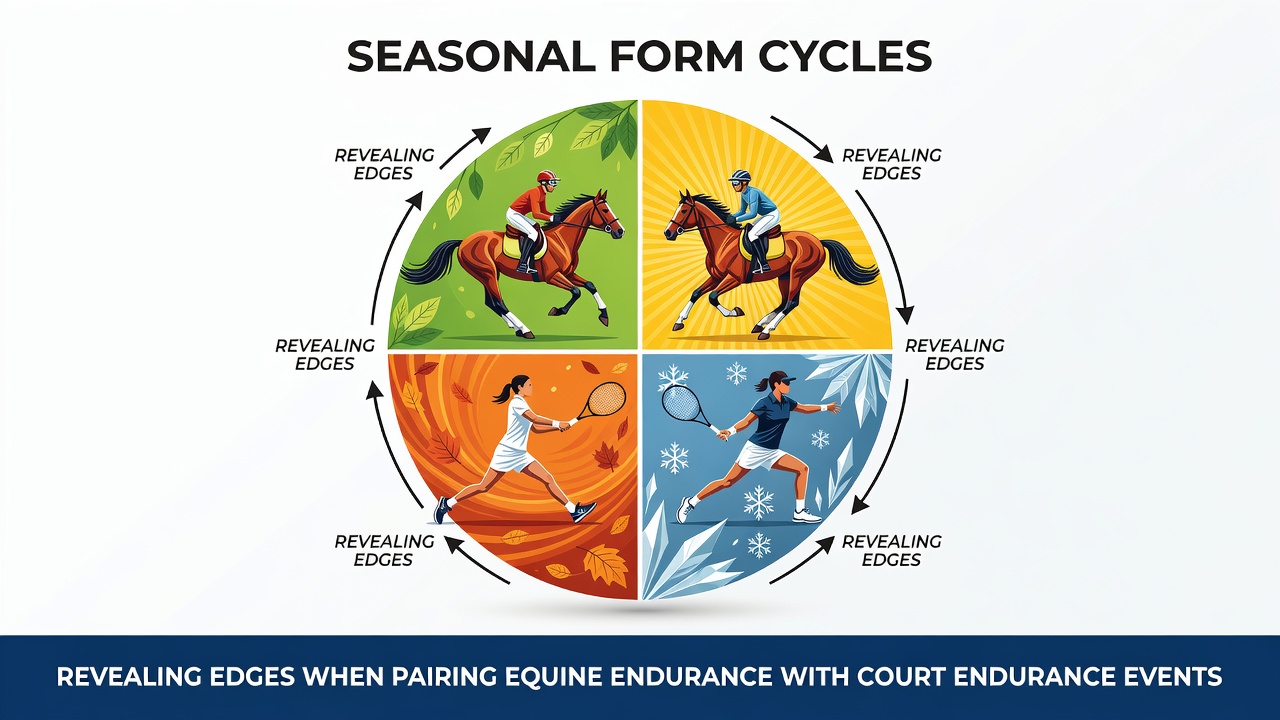
Figures released by the Japan Racing Association reveal that August endurance races post higher percentages of horses finishing within expected time bands after summer training blocks, and comparable records from the United States Tennis Association indicate that players reach deeper tournament rounds more frequently during the same calendar stretch. Observers examining multi-year trends note that these improvements cluster around events held after four to six weeks of consistent conditions, suggesting that form cycles in both sports follow comparable recovery timelines.
Regional Variations in Seasonal Performance Patterns
Equine competitions in the southern hemisphere often reach peak endurance phases during their local summer months, which align with northern hemisphere winter schedules for tennis. Data compiled by New Zealand Thoroughbred Racing shows elevated completion rates for staying races between December and February, whereas European tennis circuits record stronger baseline stamina metrics during their indoor winter season. When calendars place events from both hemispheres in overlapping windows, patterns emerge that link recovery rates across the two sports through shared physiological principles rather than direct competition overlap.
Those reviewing longitudinal statistics find that August serves as a convergence point in several major circuits, where northern equine events and southern tennis preparations create data points worth comparing. Research institutions tracking these cycles emphasize that surface changes, travel demands, and rest intervals all contribute to measurable shifts that repeat across seasons.
Conclusion
Seasonal endurance cycles in equine racing and court competitions display recurring alignments that researchers continue to document through performance databases and environmental records. Patterns observed during periods such as August 2026 illustrate how temperature stability, scheduling density, and recovery timelines intersect across disciplines. Continued collection of metrics from diverse geographic sources supports ongoing examination of these overlaps without reliance on any single regulatory framework.