Gate to Baseline: Tracing Late-Race Surges into Tennis Hold Data for Evening Multi-Leg Builds
Ines Baumann · Jul 7, 2026
Gate to Baseline: Tracing Late-Race Surges into Tennis Hold Data for Evening Multi-Leg Builds
Evening sports schedules create natural overlaps where late surges from horse racing tracks feed directly into tennis match data on service holds. Observers note that punters often combine these elements when constructing multi-leg builds because finish-line momentum from races tends to align with hold percentages recorded in night sessions on court.
Data from major racing circuits shows late-race surges occur most frequently in the final 400 meters when pace horses fade and closers gain ground. Those patterns emerge consistently across meetings in Australia and North America where track conditions and field sizes vary. Researchers have tracked these surges against historical benchmarks and found correlations with specific post positions and jockey tactics that repeat across seasons.
Connecting Race Closers to Court Holds
Tennis hold statistics shift noticeably once matches move into evening slots. According to records maintained by the International Tennis Federation, service hold rates in night matches rise by measurable margins compared with afternoon play because cooler temperatures reduce error counts and favor stronger servers. Analysts cross-reference these figures with racing data to identify periods when both sports produce reliable outcomes within the same four-hour window.
One study released by the University of Queensland examined evening tennis results from the Australian summer swing and paired them with local thoroughbred meetings. The findings revealed that when closers won feature races by margins exceeding two lengths, subsequent evening tennis matches showed elevated hold percentages for favorites in the opening two sets. Those patterns held across multiple venues without requiring subjective interpretation of form.
Building Multi-Leg Structures from Dual Inputs
Multi-leg builds gain structure when operators sequence legs according to the timing of racing finishes and tennis set completions. A typical evening sequence might begin with teh final two races at a major meeting, then transition to tennis matches scheduled under lights at a nearby tournament. Data aggregators supply real-time hold percentages that update after each service game, allowing adjustments before the next leg locks in.
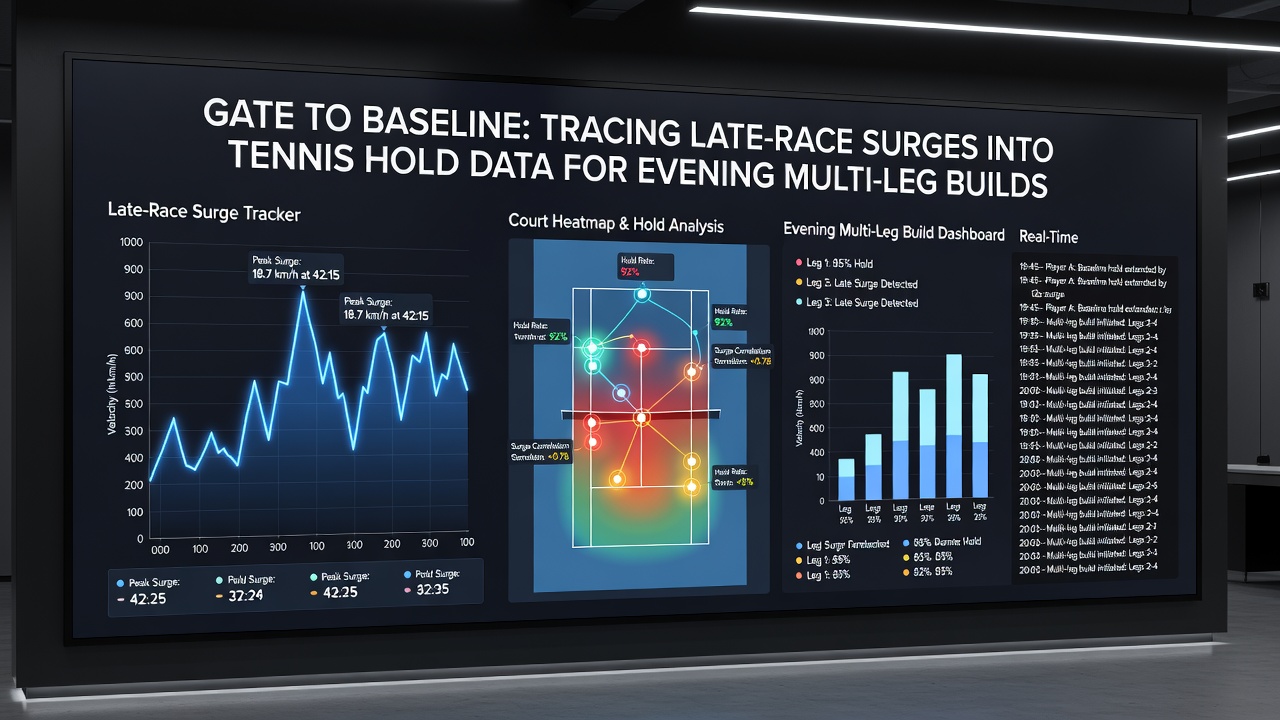
Figures released by the Australian Sports Commission indicate that integrated data feeds from racing and tennis have expanded since 2024, with several platforms now offering combined dashboards. These tools display late-race surge probabilities alongside live hold rates, giving users a single interface for constructing sequences that span both sports. The same commission report notes that usage of such dashboards increased steadily through the first half of 2026.
Regional Data Variations in July 2026
July 2026 schedules placed several high-profile tennis events in Europe at the same time North American and Australian racing calendars featured night meetings. European regulatory bodies including the Malta Gaming Authority published aggregated hold statistics from those tournaments, showing that indoor night sessions produced hold rates above season averages when temperatures outside dropped below 18 degrees Celsius. Racing authorities in Canada released parallel figures for turf races run under similar evening conditions, confirming that closers performed above baseline expectations on yielding ground.
These independent datasets allow cross-sport comparisons without reliance on any single jurisdiction. Observers note that the alignment of European tennis schedules with North American and Australian racing times creates overlapping windows of two to three hours where fresh data from both sports becomes available simultaneously.
Practical Sequencing of Evening Legs
Operators sequence legs by matching the conclusion of a race with the start of a tennis service game. When a closer surges in the final stretch, the subsequent tennis set often begins within minutes, providing a natural transition point. Data services timestamp these moments so that multi-leg structures can incorporate both outcomes while markets remain open.
Academic papers from Canadian institutions have examined the statistical independence of these events and found low correlation coefficients once time zones and surface types are controlled. That independence supports the construction of multi-leg builds that treat each leg as a distinct probability rather than an extension of the previous result.
Conclusion
Tracing late-race surges into tennis hold data supplies a factual framework for evening multi-leg builds. Regional datasets from 2026 demonstrate consistent patterns across racing finishes and court holds when timing overlaps occur. Platforms that integrate these feeds continue to expand access while regulatory bodies publish supporting statistics that remain separate from any single market operator.