Horse Track Records and Tennis Head-to-Head Stats: Building Accumulators Through Combined Performance Histories
Yara Hayes · Aug 2, 2026

Horse Track Records and Tennis Head-to-Head Stats: Building Accumulators Through Combined Performance Histories
Track records from horse racing and head-to-head statistics from tennis provide structured datasets that bettors combine when constructing accumulators; these pairings rely on measurable performance indicators rather than isolated events, and analysts track how surface conditions at racecourses align with court surfaces in tennis matches to identify overlapping trends across separate sports.
Core Data Elements in Each Sport
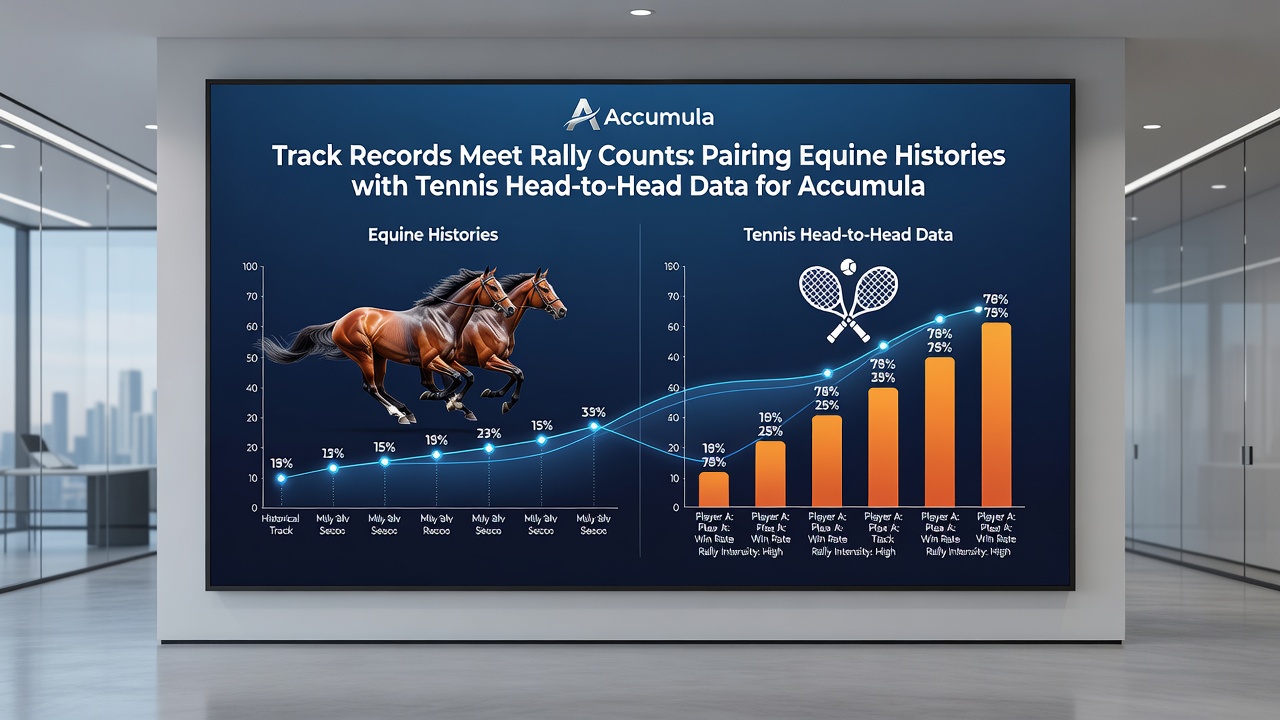
Horse racing track records include finishing times over specific distances, win rates at particular venues, and pace figures adjusted for going conditions, while tennis head-to-head records compile match outcomes between the same opponents, break-point conversion rates, and rally lengths segmented by surface type. Observers note that both datasets update continuously through official timing systems and tournament archives, which allows for consistent cross-referencing when multiple legs are assembled into a single accumulator.
Integration Methods Used by Data Analysts
Analysts align equine pace metrics with tennis rally counts by converting raw numbers into comparable ratios, such as average seconds per furlong matched against average shots per point; this approach creates normalized values that feed into probability models without requiring direct causation between the two sports. Research from the Australian Institute of Criminology shows that structured statistical pairing appears in operator reports across several jurisdictions, where teams test correlations between venue-specific horse data and player-specific tennis metrics before finalizing accumulator selections.
One dataset might list a horse's record on firm ground at a mile, and another might detail a tennis player's success rate after winning the first set on hard courts; when these figures are layered, the resulting accumulator reflects two independent performance baselines rather than a single narrative thread. Data from university-led studies in Canada indicate that such layered inputs maintain separate variance calculations, which keeps the model from over-weighting any one sport's recent form.
Practical Construction Steps for Accumulators
Bettors begin by filtering horse racing entries for those meeting minimum track-record thresholds at chosen distances, then cross-check the selected tennis matches for head-to-head edges that exceed a preset percentage; both filters run through the same software interface so that the final slip contains legs drawn from each sport without manual recalculation. August 2026 schedules already list several overlapping festival meetings and grand-slam qualifying rounds, giving analysts fresh windows to refresh the underlying datasets before those events begin.
Each accumulator ticket therefore carries at least one equine leg and one tennis leg, with stake sizing determined by the combined implied probability rather than by individual sport margins. Industry organizations such as the European Gaming and Betting Association publish periodic summaries that describe how operators structure these multi-sport products, noting that the separate regulatory environments for racing and tennis require distinct compliance checks even when the bets are grouped together.
Dataset Sources and Update Cycles
Official timing providers release horse racing results within minutes of each race, while tennis governing bodies publish point-by-point data at the conclusion of every match; both streams feed into commercial databases that analysts query nightly to recalibrate accumulator parameters. Those who maintain the models report that surface-type variables, such as turf versus hard court, exert measurable influence on the respective performance ratios and therefore receive explicit weighting in the final calculations.
Academic papers from the University of Sydney have examined how venue-specific horse records interact with player-specific tennis metrics when the two are placed in the same accumulator structure, finding that the independence of the datasets preserves the overall variance estimate. This independence matters because regulatory bodies in multiple regions require transparent probability reporting for combined bets, and separate variance figures simplify the required disclosures.
Conclusion
Track records and head-to-head statistics supply two distinct but compatible data streams that operators and analysts combine when building accumulators across horse racing and tennis. The process depends on normalized metrics, regular dataset refreshes, and compliance with separate sporting regulations, all of which remain consistent regardless of the calendar month or specific event schedule. Continued publication of raw timing and scoring data supports further refinement of these cross-sport constructions without introducing shared variables between the disciplines.