Pace Data Driving Strategic Calls in Live Racing, Tennis, and Basketball Scenarios
Eden Richter · Jun 7, 2026
Pace Data Driving Strategic Calls in Live Racing, Tennis, and Basketball Scenarios
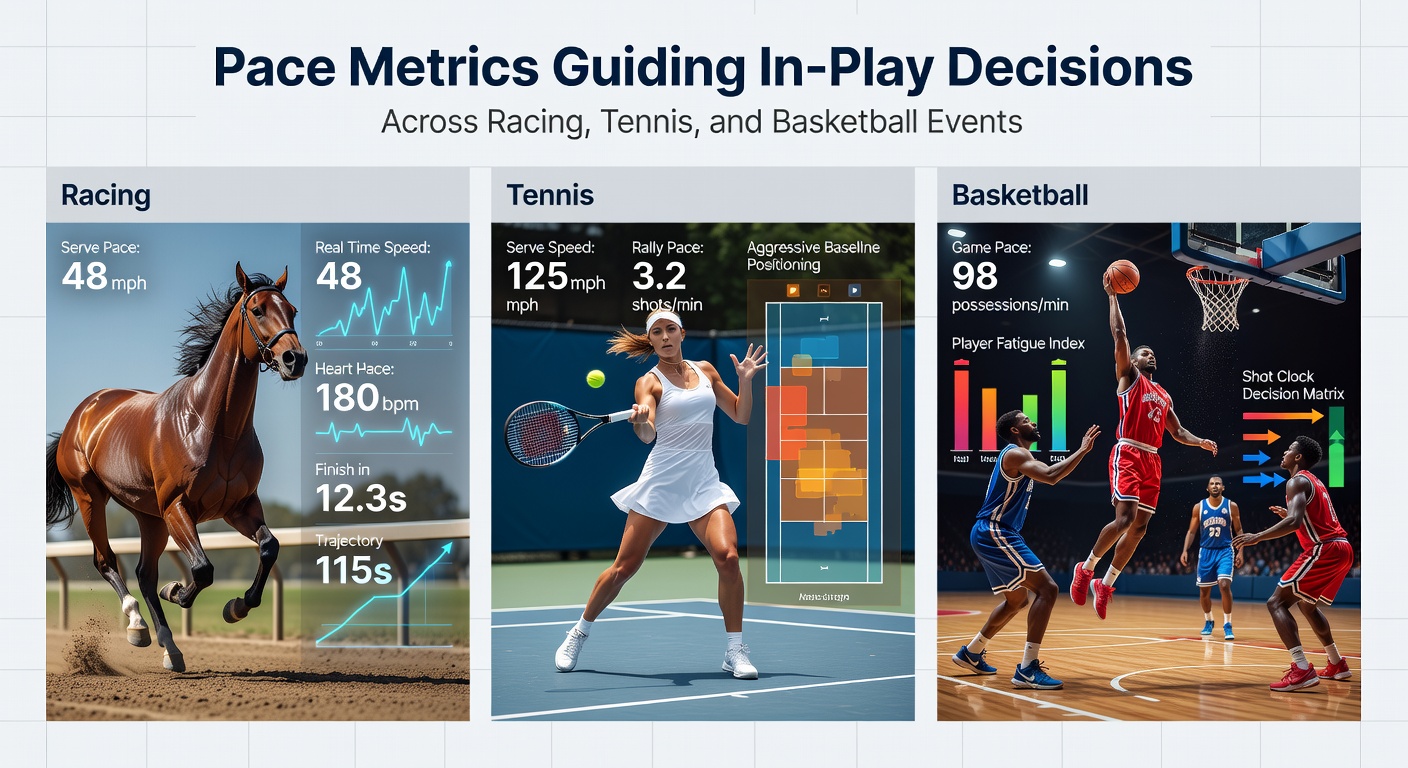
Analysts track pace metrics in real time to shape decisions during horse racing events, tennis matches, and basketball games, where split-second adjustments often determine outcomes. Data from timing systems and wearable sensors feed into models that highlight shifts in speed, rhythm, and tempo, allowing coaches, jockeys, and players to respond with precision. In June 2026, several international federations integrated updated pace-tracking software into their live feeds, which expanded access to granular metrics for teams and analysts worldwide.
Tracking Speed Variations in Horse Racing
Horse racing relies heavily on sectional timing that records how quickly animals cover each segment of a track, and trainers adjust tactics mid-race when early fractions deviate from expected patterns. Jockeys receive radio updates that compare current pace against historical benchmarks for similar conditions, which helps them decide whether to conserve energy or press forward. Researchers at the Australian Institute of Sport have documented how these measurements correlate with finishing positions across thousands of races, showing consistent edges for riders who adapt to pace changes rather than sticking to pre-race plans.
Weather and track surfaces further influence these readings, since softer ground typically slows overall times while favoring certain running styles. Observers note that syndicates and owners now incorporate live pace dashboards into their operations, which allows them to signal adjustments to jockeys before critical turns. This approach has become standard at major venues where electronic timing strips line the railings and transmit data every few seconds.
Rhythm and Rally Pace in Tennis
Tennis matches hinge on rally length and ball speed, metrics that coaches monitor through court-side cameras and player-worn devices to identify fatigue or momentum shifts. When average rally duration drops below a player's established baseline, teams often call for tactical changes such as increased net approaches or altered spin rates. Studies from the University of British Columbia's sports performance lab reveal that players who adjust their own tempo in response to opponent pace data win a higher percentage of deciding sets, particularly on faster surfaces where shorter points dominate play.
Break-point situations amplify the value of these measurements, because servers who maintain consistent first-serve speeds while varying placement tend to hold serve more reliably. Data providers supply real-time overlays during broadcasts, which lets viewers see how pace fluctuations align with score progression. Federations in Europe and North America now require certified timing equipment at elite events to ensure consistent data collection across tournaments.
Tempo Control in Basketball Games
Basketball teams measure possessions per minute and transition speed to decide when to accelerate or slow the game, with coaches using tablets that display live pace comparisons against opponent season averages. When a squad notices its transition rate climbing above normal thresholds, substitutions often target players who excel at half-court execution rather than open-floor running. The NCAA's analytics consortium reported in early 2026 that teams adjusting defensive schemes based on live tempo data reduced opponent fast-break points by measurable margins in conference play.
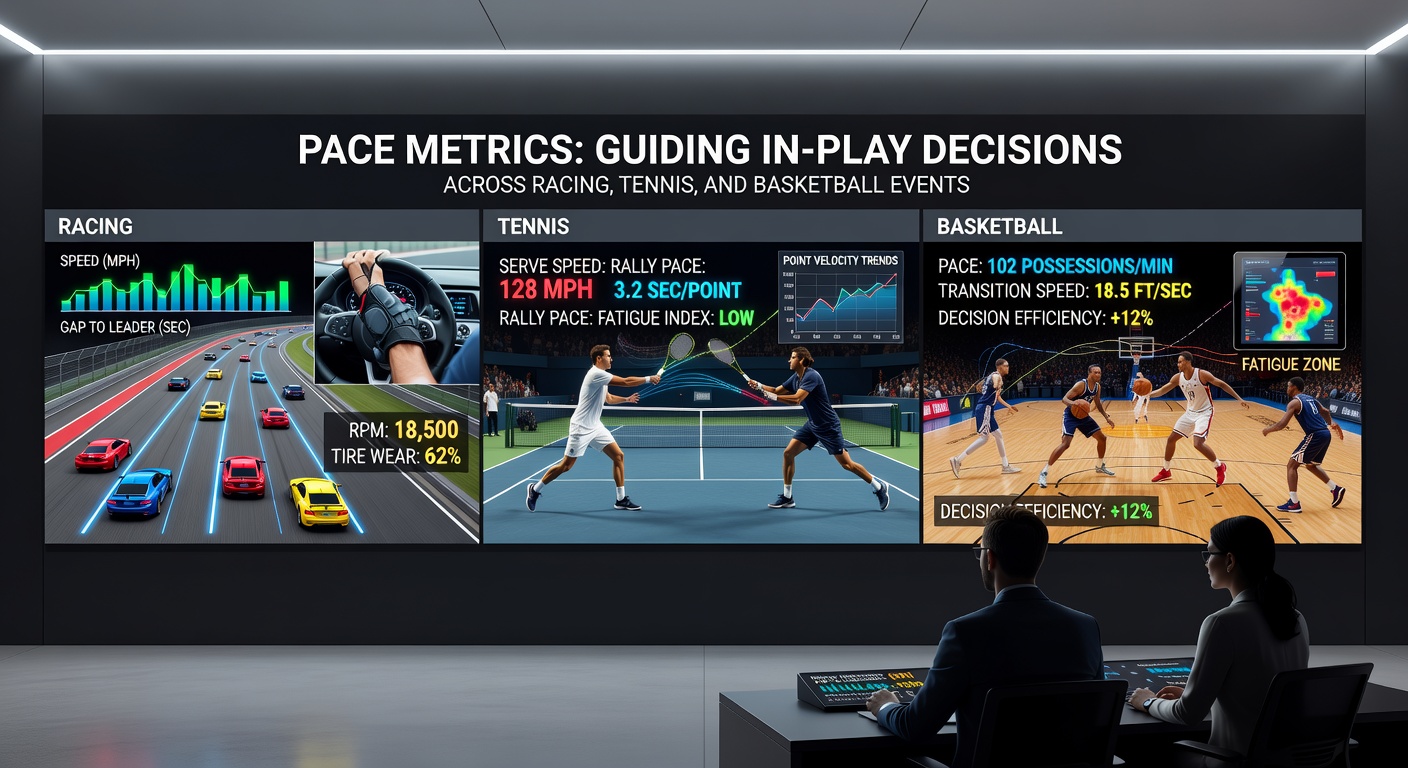
Half-time adjustments frequently draw from these metrics, since coaches can review first-half pace profiles and instruct players to alter spacing or defensive pressure accordingly. International competitions have adopted similar systems, and league-wide data sharing agreements allow teams to benchmark their tempo against global standards. Players equipped with motion sensors provide additional layers of information about individual movement efficiency during high-tempo stretches.
Cross-Sport Applications and Shared Technologies
Software platforms now aggregate pace information across racing, tennis, and basketball, which creates unified dashboards that analysts use to compare patterns between events. A single interface might display sectional splits from a race alongside rally durations from a concurrent tennis match and possession rates from a basketball game, revealing common principles of energy management. Industry reports from the International Society of Sports Analytics indicate rising adoption of these multi-sport tools among professional organizations seeking transferable insights.
Training programs increasingly incorporate cross-discipline modules so that performance staff recognize how pace principles translate from one activity to another. Events scheduled in June 2026 featured pilot programs where mixed-sport teams tested shared algorithms, and early results showed improved decision speed during live scenarios. Regulatory bodies in several regions have begun reviewing data standards to ensure accuracy and consistency when metrics influence official strategies or officiating reviews.
Conclusion
Pace metrics continue to evolve as sensors, cameras, and algorithms grow more sophisticated, delivering clearer pictures of how speed and rhythm shape outcomes in racing, tennis, and basketball. Organizations that integrate these measurements into daily operations gain structured ways to respond to unfolding events, while ongoing research refines the models that convert raw numbers into actionable guidance. As technology advances through 2026 and beyond, the role of pace data in live environments looks set to expand across additional sports and competitive levels.