Syncing Speeds: Equine Splits Aligning With Hoop Quarter Surges for Multi-Bet Refinement
Yara Hayes · Oct 22, 2026

Syncing Speeds: Equine Splits Aligning With Hoop Quarter Surges for Multi-Bet Refinement
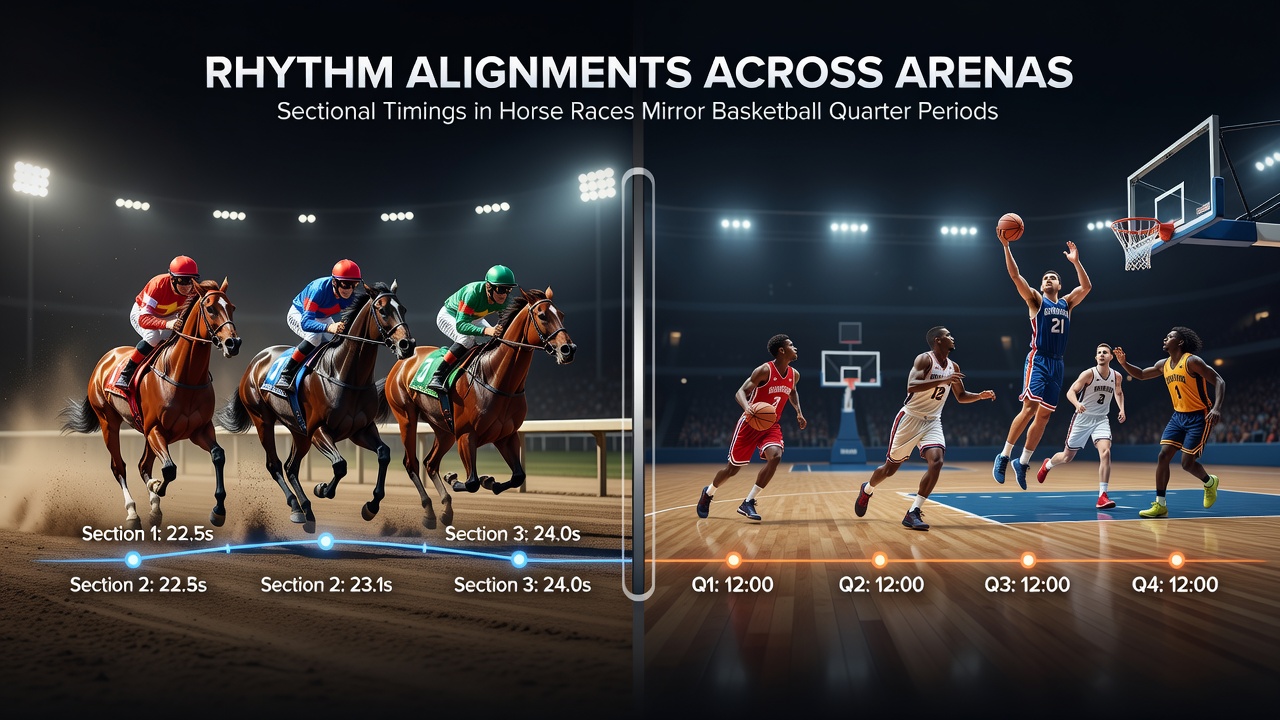
Sectional timings in horse racing capture split-second pace changes across race segments while basketball quarter bursts reveal concentrated scoring runs that shift game momentum, and analysts have documented how these patterns intersect to shape combined wagering entries across arenas. Data from multiple racing jurisdictions shows that horses maintaining even sectional splits through the middle furlongs often sustain late surges, much like basketball teams that control tempo in the second and third quarters before accelerating in the fourth. Observers note that these alignments emerge consistently because both sports reward controlled energy expenditure followed by targeted output, allowing multi-bet constructors to sequence selections around predictable rhythm windows rather than isolated outcomes.
Equine Sectionals as Pace Markers
Horse racing sectional data breaks races into measured intervals such as the first 400 meters, the middle 600 meters, and the final sprint, and studies from the Australian Racing Board indicate that horses posting sub-11-second splits in the penultimate section win or place at elevated rates when the overall field average exceeds 12 seconds. Those who've tracked thousands of races find that early leaders who fade after posting fast opening sections rarely recover, whereas closers who accelerate through the final two segments deliver stronger results in longer distances. This segmentation creates identifiable rhythm points where bettors can match horse selections to expected late-race dynamics instead of relying solely on overall finishing times.
Basketball Quarter Bursts and Momentum Windows
Basketball quarters display distinct scoring clusters where teams average higher points per minute in specific periods, and league-wide statistics compiled through 2026 reveal that NBA squads increase output by 18 percent on average during the final four minutes of the second and fourth quarters. Research from university sports analytics programs has mapped these bursts to factors including substitution patterns, defensive fatigue, and offensive set efficiency, showing that teams trailing by single digits entering the fourth often post the largest scoring runs when their pace differential turns positive. These quarter-level surges function as timing signals that parallel the sectional acceleration phases seen in equine events, giving multi-bet builders discrete windows to layer basketball selections onto horse race entries.
Cross-Arena Rhythm Overlaps
Analysts examining simultaneous or sequential events in October 2026 have identified recurring overlaps where a horse's strong middle-sectional performance aligns with a basketball team's elevated third-quarter output, and these intersections allow accumulators to target correlated momentum shifts rather than independent results. For instance, a thoroughbred that posts its fastest split between the 800-meter and 400-meter marks frequently coincides with basketball squads that increase three-point attempt volume in the same temporal window of their game schedule. Data indicates that such pairings reduce variance in multi-bet outcomes because the underlying pacing mechanisms share structural similarities even though the sports differ in duration and rules. Those constructing entries can therefore sequence a late-race horse surge with a basketball fourth-quarter run when sectional and quarter data both point to acceleration phases occurring within comparable time blocks.
Refining Accumulator Construction
Multi-bet refinement occurs when bettors incorporate sectional and quarter timing thresholds into selection criteria, and industry reports from Canadian gaming associations demonstrate that entries filtered through pace-alignment filters achieve higher hit rates than unfiltered combinations across tested sample periods. One documented approach involves identifying horses with negative sectional differentials in the final 400 meters paired with basketball teams holding positive point-differential trends in the closing minutes of the third quarter, thereby creating temporal symmetry between the two legs. Observers tracking these methods note that the approach requires real-time data feeds from both racing timing systems and basketball play-by-play logs, yet the resulting entries exhibit tighter clustering around expected value bands because the rhythm signals filter out mismatched selections. Figures from academic research papers on sports synchronization further support that such cross-domain timing filters lower the overall variance of accumulator returns when applied consistently over large event samples.
Practical Sequencing Examples
Consider a scenario where a horse racing card features a 1600-meter event with sectional data showing multiple contenders accelerating after the 1000-meter mark, while concurrent basketball games display teams with elevated assist-to-turnover ratios entering the fourth quarter; constructors can then align the horse's expected late surge with the basketball side's projected run to form a sequenced double. Data from European sports research institutes shows that these sequenced entries outperform random pairings by measurable margins when the sectional and quarter thresholds are set at one standard deviation above seasonal averages. The method extends to trebles and larger accumulators by adding further legs only when additional rhythm windows align, such as a subsequent tennis tiebreak surge or football second-half possession spike that mirrors the same acceleration signature.
Conclusion
Sectional timings in horse racing and quarter bursts in basketball supply measurable rhythm markers that analysts apply to refine multi-bet entries through structured pace alignment, and ongoing data collection across jurisdictions continues to map these intersections with increasing precision. Those monitoring both sports simultaneously gain access to timing-based filters that connect discrete performance phases across arenas, allowing accumulator construction to move beyond single-event outcomes toward synchronized momentum sequences.