Weather Fronts Altering Performance Patterns Across Racing Tracks, Tennis Courts, and Arena Floors
Otto Richter · Jul 28, 2026
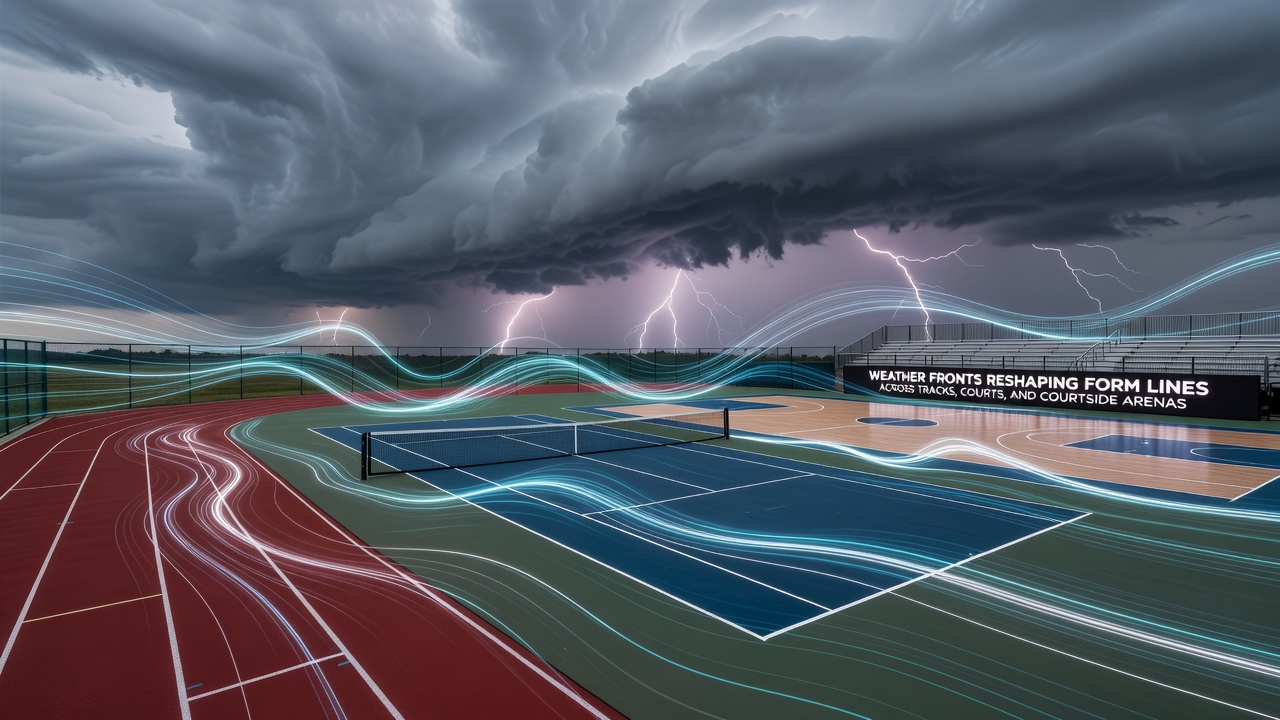
Weather Fronts Altering Performance Patterns Across Racing Tracks, Tennis Courts, and Arena Floors
Weather systems bring measurable changes to surfaces and athlete responses in horse racing, tennis, and basketball, where data from multiple seasons show shifts in speed, bounce, and endurance metrics. Researchers tracking atmospheric pressure changes have documented how cold fronts increase track moisture levels, which in turn slows equine times by several seconds per furlong according to records maintained by racing authorities in Australia and the United States.
Impact on Equine Racing Surfaces
Frontal passages often coincide with rainfall that alters turf firmness ratings, and studies from the University of Melbourne's equine science program indicate that horses running on softened ground expend more energy, leading to different finishing spreads compared with dry conditions. Observers note that warm fronts arriving ahead of stable high-pressure systems can dry out dirt tracks within hours, which compresses the surface and allows faster early fractions in sprint events. In July 2026, multiple North American meets recorded a sequence of alternating fronts that produced variable going descriptions from one day to the next, with official clockers reporting consistent differences in sectional times that matched humidity and temperature readings taken at track level.
Effects on Tennis Court Play
Tennis surfaces respond to humidity and temperature gradients in ways that affect ball trajectory and player movement, while data collected by the International Tennis Federation across outdoor hard courts shows that dew points above 15 degrees Celsius increase friction and reduce bounce height. Cold fronts passing through regions like the American South during summer tournaments have been linked to slower court speeds, prompting adjustments in racket string tension among competitors who track these variables. Researchers have measured serve speeds dropping by up to 3 percent on courts recently exposed to rain from preceding weather systems, and the same studies found that recovery times between points lengthen when players face elevated heat indices following warm frontal boundaries.
Changes in Basketball Arena Environments
Indoor facilities experience subtler but still quantifiable influences when exterior weather fronts alter HVAC loads and air density inside arenas, and engineering reports from the National Basketball Association detail how lower barometric pressure can slightly increase the distance traveled by a basketball during long passes and shots. Courtside sensors installed in several venues have logged minor variations in floor traction when external humidity spikes coincide with door openings during player substitutions. One analysis covering the 2025-2026 season found that games played immediately after the passage of strong cold fronts showed a small but repeatable uptick in three-point attempt success rates, attributed to drier indoor air that reduced ball grip for defenders.
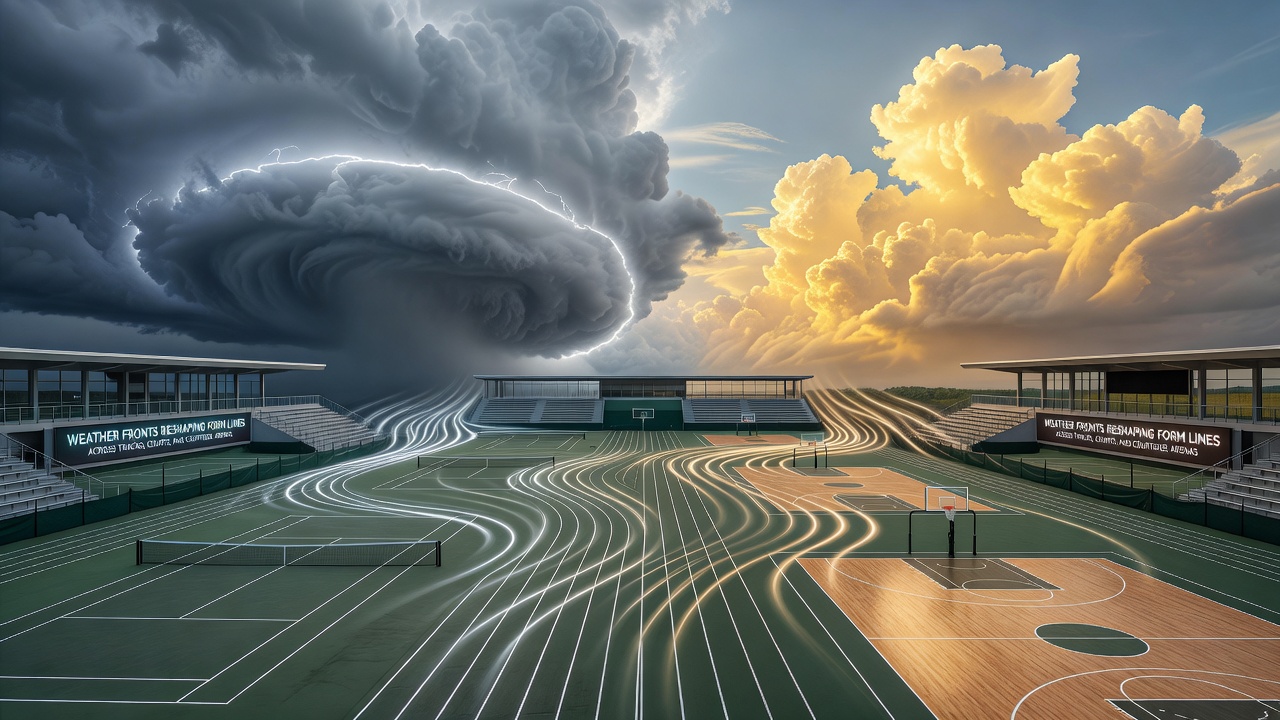
Cross-sport comparisons reveal shared patterns where rapid temperature drops from incoming fronts correlate with higher injury reports in all three disciplines, while stable conditions following frontal systems produce more predictable performance baselines. Government meteorological agencies in Canada and the European Union publish seasonal outlooks that sports scientists incorporate into preparation models, allowing teams and trainers to anticipate surface or environmental adjustments several days in advance. Those who compile longitudinal datasets have observed that July periods frequently feature overlapping frontal activity across hemispheres, which creates overlapping data points useful for refining predictive algorithms used by performance analysts.
Data Integration and Forecasting Tools
Performance databases now routinely merge weather station outputs with timing and scoring systems, and partnerships between academic institutions and sports governing bodies have produced open-access models that forecast expected changes in key metrics such as stride length, rally duration, and shot arc. These tools rely on real-time inputs from pressure sensors and moisture probes placed at competition sites, delivering updates that help officials decide whether to adjust schedules or equipment specifications. Figures released by the Australian Bureau of Meteorology in coordination with racing and tennis federations demonstrate that accurate incorporation of frontal timing reduces discrepancies between expected and observed results by measurable percentages across multiple events.
Conclusion
Continued monitoring of weather fronts and their effects on tracks, courts, and arenas supplies objective data that informs equipment choices, training adjustments, and scheduling decisions across horse racing, tennis, and basketball. The integration of atmospheric measurements with performance records continues to expand the precision of these assessments in venues worldwide.